

Description
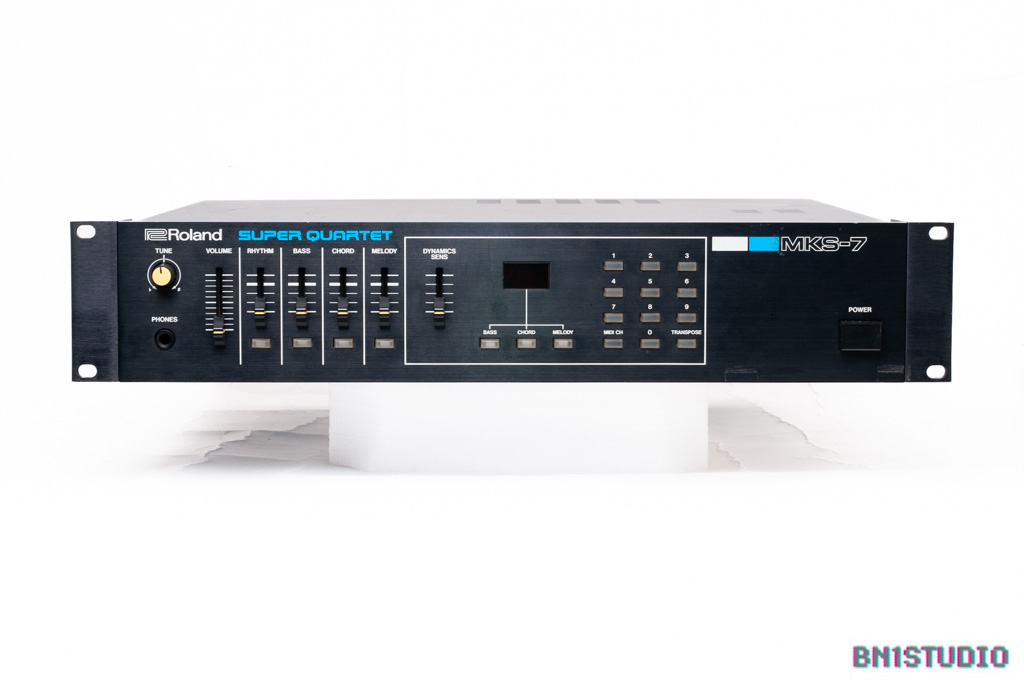
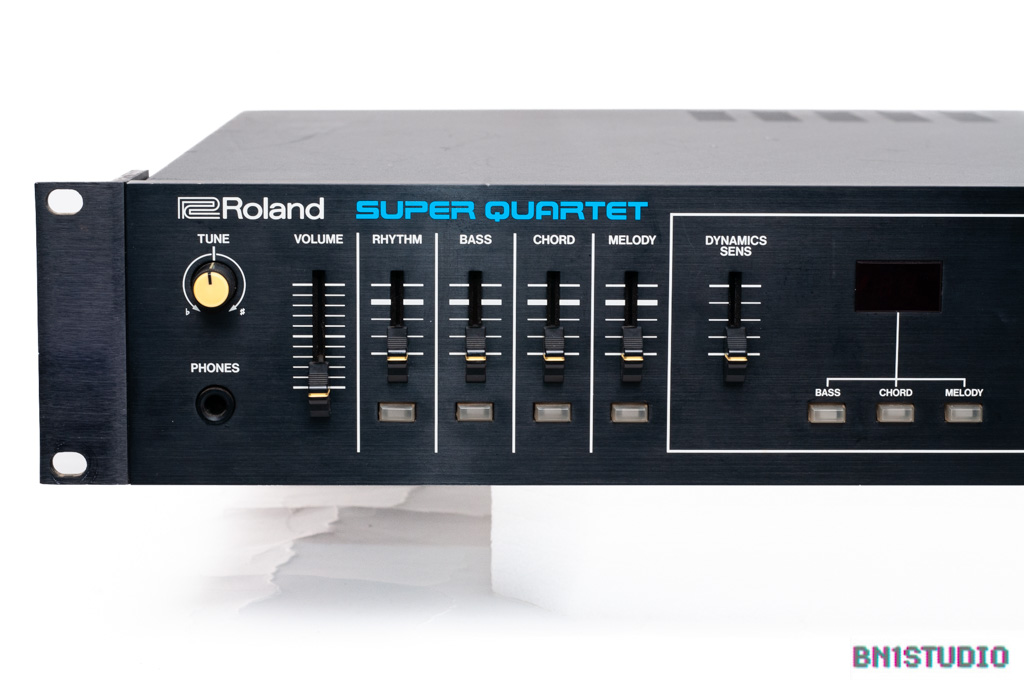
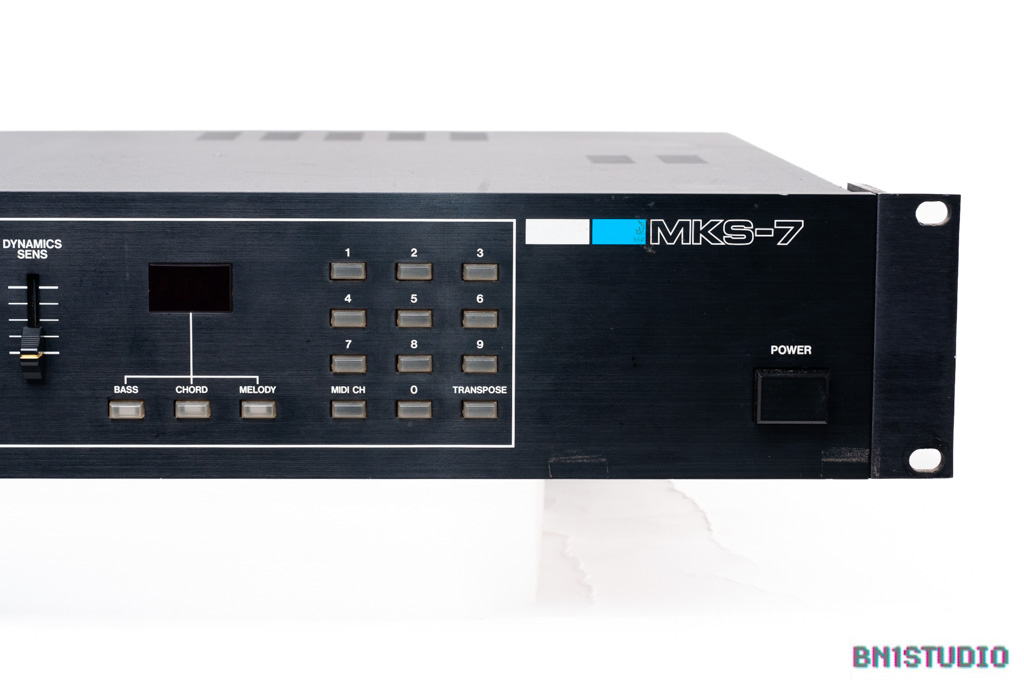
The MKS-7 is a multitimbral synth with four dedications sections: Chords, Bass, Melody and Drums. The first three are the same as in the Juno 106 synth and the drums come courtesy of the legendary TR-707
Juno patches can be uploaded to the MKS-7 and most Juno editors work with it
Whole mode allows the Melody and Chord sections to combine to make a six-voice polysynth. There is lots of info on the Sonicstate page and a comparison of the MKS-7 vs Juno 106 on the 9 Bit page – links to these pages are under the Links tab.
“A strange module with 4 sections (the “quartet”) basically – but not totally – it’s a multitimbric Juno-106 with drum machine from Roland Tr-707 in a whole rack unit.”
“This has to be the most underatted of all Rolands analogue famaliy. It is incredible. The sonic multitimbral power of 3 juno 106S AND A TR707 DRUM MACHINE in a single rack! Isane, if you know how great the juno 106 is for bass, strings pads & effects. You will understand how special the MKS7 is”
“The most underrated and fun MKS!”
“Briefly, this is a large box of sounds — sounds that are split up into four distinct sections: Bass, Rhythm, Melody and Chord. Each section can be given its own MIDI channel number and thus can function as separate instruments. You can think of it as being the sound-producing side of a drum machine, a small polysynth, and two mono synths all shovelled into one unit”
“I’ve had this Roland MKS-7 since the 80s and it’s analogue sweep patches are the thickest I’ve ever heard. It’s seven voice polyphonic is very helpful. Am I alone on this thinking?”
“It’s an awesome module. It’s essentially a Roland Juno-106 in a box with an extra bass channel and some added TR-707 drum sounds.”
“So..I’ve owned an MKS-7 Super Quartet for a few years now….I have to say it’s one of my very favourite MKS modules..”
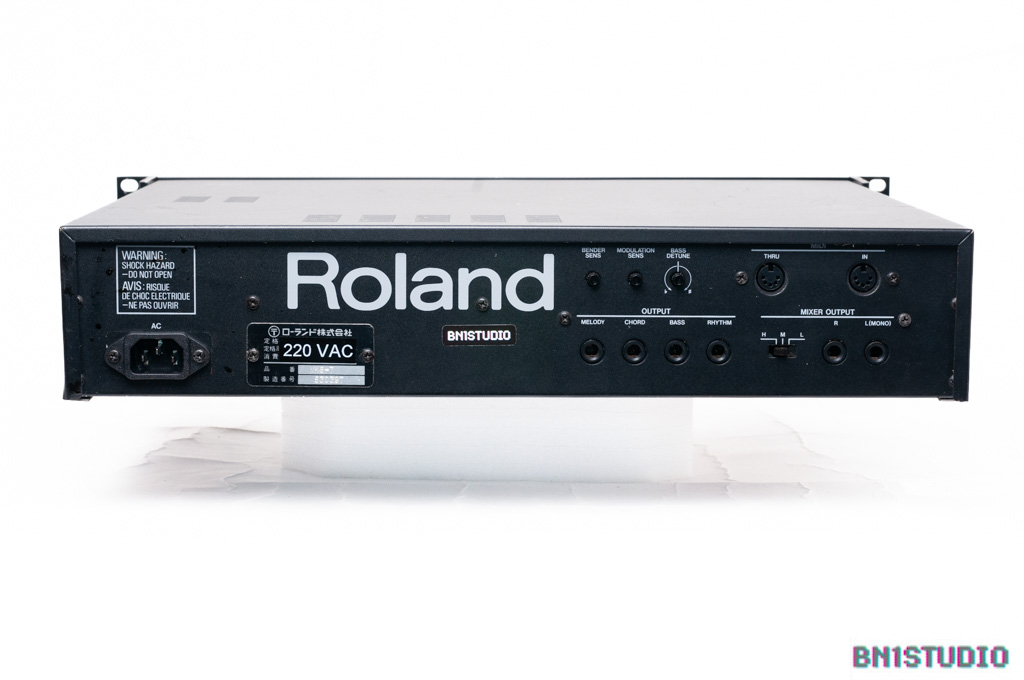
Refurbished in our workshops. Standard IEC power connector fitted with a mains earth
Tested & working 100%. Photo show the synth for sale